- To Use the Verb “To Be” in Present Simple Tense, Pair It with a Personal Pronoun
- Word Order When Using “To Be” in Present Simple Tense
- Using the Verb “To Be” in a Negative Sentence
- Frequently Asked Questions
- What is the main focus of the article?
- How do you form sentences using the verb ‘to be’?
- What is the importance of word order in English sentences?
- How do you create negative sentences with the verb ‘to be’?
- What are contractions, and how are they used with the verb ‘to be’?
This article is designed specifically for beginners learning English, as understanding the verb “to be” is essential in mastering English grammar. It’s one of the most crucial yet challenging words in the language. While we’ve already explored its past tense forms in previous articles, this piece will focus on the simple present tense, providing you with a solid foundation for your studies.
Unlike other verbs in English, to be is conjugated (in other words, it changes) according to grammatical person and number.
Stay tuned as we explore examples of how the verb “to be” functions in the present tense. Continue reading to expand your knowledge, or check out the online English grammar classes offered by LingualNeeds for more in-depth learning.
To Use the Verb “To Be” in Present Simple Tense, Pair It with a Personal Pronoun
To effectively convey the current state of yourself, another person, or an object, begin with a personal pronoun. In English, the personal pronouns include:
I –
You –
We –
They –
He –
She –
It –
To create a straightforward sentence that expresses your status as a student, you simply need the linking verb “to be.” For example, you would say: “I am a student.”
For this type of sentence, you can choose any other person/persons and use the proper form of to be:
He/She is a student.
We are doctors.
You are a student.
Look at the table to see how to form sentences in the present simple tense using the verb to be.
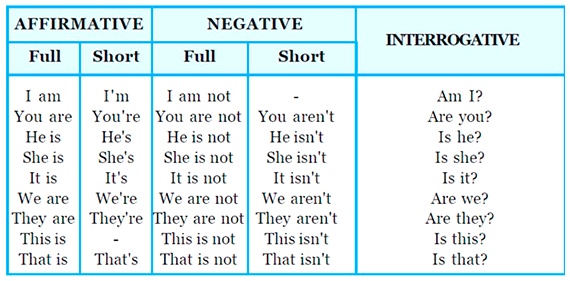
In written English, we often use contractions with the verb “to be” to create a more conversational tone. For instance, “I am” becomes “I’m,” and “She is” turns into “She’s.” This use of an apostrophe helps streamline our speech and writing, making it more fluid and approachable.
Word Order When Using “To Be” in Present Simple Tense
In English, word order is very important: subject + verb + object.
If you need to form a question, simply move the verb to be to the beginning of the sentence:
- Am I a student?
- Are we students?
- Is she clever?
You can answer like this:
Yes, he is / No, he is not = isn’t.
Yes, we are / No, we are not = aren’t.
Using the Verb “To Be” in a Negative Sentence
If you need to form a negative sentence, use the adverb not after the connecting verb:
- I am not a student.
- You are not a doctor.
- She is not a teacher.
In negative sentences, we can simplify our language by using contractions for the verb “to be” combined with the adverb “not.” For instance, instead of saying “He is not,” we can say “He isn’t,” and instead of “They are not,” we can use “They aren’t.” This makes our speech and writing more fluid and conversational.
Enhance your skills with the English verb “to be” by crafting sentences using the expressions provided. Feel free to share your creations in the comments below!
- To be glad –
- To be busy –
- To be married –
- To be single –
- To be lucky –
- To be ready (for) —
By the way, the word to together with the verb be forms the infinitive form of the verb.
If you’re unsure about these basics, try improving your English skills with an online English course for beginners.
But the best advice I have is to practice!
Frequently Asked Questions
What is the main focus of the article?
The article focuses on teaching beginners how to use the verb ‘to be’ in the present simple tense.
How do you form sentences using the verb ‘to be’?
To form sentences, pair the verb ‘to be’ with a personal pronoun, for example, ‘I am a student’.
What is the importance of word order in English sentences?
In English, the correct word order is subject + verb + object, which is essential for clear communication.
How do you create negative sentences with the verb ‘to be’?
To create negative sentences, place ‘not’ after the verb, such as ‘I am not a student’.
What are contractions, and how are they used with the verb ‘to be’?
Contractions combine the verb ‘to be’ with ‘not’ for fluidity, for example, ‘He is not’ becomes ‘He isn’t’.