- What are personal pronouns?
- Types of personal pronouns
- Understanding first, second, and third-person pronouns
- First-person pronouns
- Second-person pronouns
- Third-person pronouns
- Plural forms in personal pronouns
- Using personal pronouns correctly
- Subject pronouns
- Object pronouns
- Possessive pronouns
- Reflexive pronouns
- Subject and object pronouns
- Common mistakes and tips for learning
- Common mistakes
- 1. Confusing subject and object pronouns:
- 2. Mixing up possessive pronouns and possessive adjectives:
- 3. Misusing reflexive pronouns:
- Tips for mastering personal pronouns
- Second-person singular vs. plural
- The singular they
- To wrap up
- Frequently Asked Questions
- What are personal pronouns?
- What are the different types of personal pronouns?
- How do first, second, and third-person pronouns differ?
- What are common mistakes when using personal pronouns?
- How can I improve my understanding of personal pronouns?
Understanding English pronouns is essential for anyone studying the language. These small yet powerful words serve as substitutes for nouns, enhancing clarity in sentences and reducing unnecessary repetition.
In this article, we’ll explore English personal pronouns, how to use them correctly, and tips for learning them effectively.
What are personal pronouns?
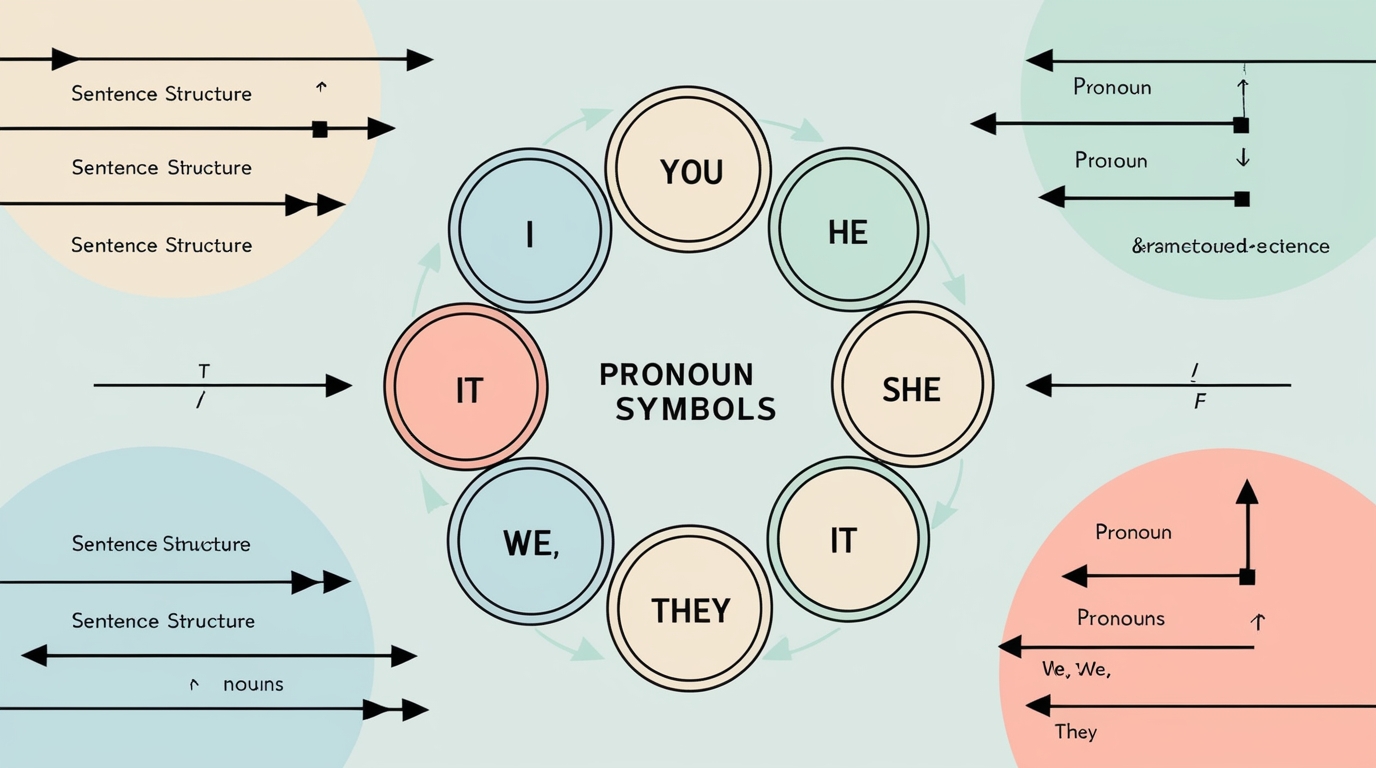
Personal pronouns are compact words that stand in for specific names of individuals. In English, each personal pronoun reflects important details such as the grammatical person, gender, number, and case of the noun it represents. Examples include “I,” “you,” “he,” “she,” “it,” “we,” “they,” as well as object forms like “me,” “him,” “her,” “us,” and “them.”
Read also: Contractions in English: How to use them confidently when speaking and writing English
Types of personal pronouns
Personal pronouns serve as substitutes for names of individuals or animals in sentences. They simplify our speech and writing by eliminating the need to repeatedly use lengthy proper nouns, making communication smoother and more efficient.
There are several types of personal pronouns, each serving a different function in a sentence. They include:
- Subject pronouns: Used as the subject of a sentence (e.g., I, you, he, she, it, we, they).
- Object pronouns: Used as the object of a verb or preposition (e.g., me, you, him, her, it, us, them).
- Possessive pronouns: Indicate ownership or possession (e.g., mine, yours, his, hers, ours, theirs).
- Reflexive pronouns: Refer back to the subject of the sentence (e.g., myself, yourself, himself, herself, itself, ourselves, yourselves, themselves).
Understanding first, second, and third-person pronouns
Personal pronouns fall into three distinct categories, each playing a vital role in communication. By using these categories effectively, we enhance clarity and minimize repetitive language in our conversations.
First-person pronouns
First-person pronouns are words that allow speakers to refer to themselves directly. They come into play when the subject of a sentence involves the individual or group expressing the thoughts or actions. Common examples of first-person pronouns include:
- Singular: I, me
- Plural: we, us
Second-person pronouns
Second-person pronouns directly engage the listener or reader, creating a personal connection in communication. These pronouns specifically refer to the person or people being addressed. Common examples include:
- Singular and Plural: you
Third-person pronouns
Third-person pronouns serve to reference individuals or objects that are being talked about, distinct from both the speaker and the listener. These pronouns are essential for discussing others or describing things. Common examples include:
- Singular: he, him, she, her, it
- Plural: they, them
Plural forms in personal pronouns
Every grammatical person has plural forms to signify when multiple individuals are involved. In English, the second-person pronoun “you” functions for both singular and plural, which can sometimes create confusion. To clarify this distinction, various regions have developed alternatives; for example, in the UK, people often use “you lot” to refer specifically to a group.
Using personal pronouns correctly
Mastering the use of personal pronouns is essential for effective and precise communication. Let’s explore the rules and provide examples for each type to enhance your understanding!
Subject pronouns
Subject pronouns replace the subject (the doer) in a sentence. For example:
- I am learning to play the piano.
- You are going to the market.
- They enjoy hiking on weekends.
Object pronouns
Object pronouns replace the object (the receiver) in a sentence. For example:
- She invited me to the party.
- The coach praised you for your effort.
- The teacher gave us homework assignments.
Possessive pronouns
Possessive pronouns show ownership and eliminate the need to repeat information. For example:
- This pencil is mine.
- The final decision is yours.
- These seats are theirs.
Reflexive pronouns
Reflexive pronouns play a crucial role in sentences where the subject and object refer to the same individual or entity. For instance:
- He taught himself to cook.
- She reminded herself to call her friend.
- They congratulated themselves after the game.
Subject and object pronouns
Personal pronouns play a crucial role in sentences, serving as either subjects or objects. Subject pronouns, which fall under the nominative case, are used as the doers of the action, while object pronouns belong to the objective case and receive the action. Understanding this distinction is key to mastering sentence structure!
|
Person |
Nominative |
Objective |
|---|---|---|
|
1st singular |
I |
me |
|
2nd singular |
you |
you |
|
3rd singular |
he, she, they, it |
him, her, them, it |
|
1st plural |
we |
us |
|
2nd plural |
you |
you |
|
3rd plural |
they |
them |
Common mistakes and tips for learning
Learning personal pronouns can be challenging, but understanding common mistakes and following some practical tips can help.
Common mistakes
1. Confusing subject and object pronouns:
- Incorrect: Me will finish the report.
- Correct: I will finish the report.
2. Mixing up possessive pronouns and possessive adjectives:
- Incorrect: That is her’s book.
- Correct: That is her book.
3. Misusing reflexive pronouns:
- Incorrect: He gave the present to hisself.
- Correct: He gave the present to himself.
Tips for mastering personal pronouns
- Practice regularly: Use personal pronouns in daily conversations and writing exercises.
- Use language learning apps: These apps often have exercises specifically focused on pronouns.
- Read and listen to English: Exposure to correct usage in books, articles, and conversations helps reinforce learning.
- Ask for feedback: When speaking or writing in English, ask teachers or native speakers to correct your pronoun usage.
Second-person singular vs. plural
A common challenge in English is the use of the word “you” for both singular and plural forms, which can lead to confusion. Unlike many other languages that have specific terms to differentiate between one person and multiple people, English relies heavily on context to clarify whether “you” refers to one individual or a group.
- Would you like to join the meeting?
This sentence leaves us guessing whether the invitation is meant for one person or a group. To clarify this ambiguity, certain regions use extra terms to specify the plural form of “you.” For instance, in the US, people often say “you guys,” while in the UK, “you lot” is commonly used.
The singular they
The second-person pronoun can sometimes lead to ambiguity, but the third-person pronoun provides a gender-neutral alternative when the gender of an individual isn’t clear. While many style guides advocate for the use of “he or she” and “him or her,” the singular “they” has gained popularity in informal contexts as a practical solution.
- If a student forgets their homework, they can submit it the next day.
The singular they is deemed acceptable usage by the Associated Press, Merriam-Webster, and several other language guides.
To wrap up
Mastering the use of personal pronouns is essential for anyone looking to excel in English grammar. These pronouns streamline communication, making it clearer and more natural. By consistently practicing and being aware of frequent errors, learners can sharpen their understanding of personal pronouns, significantly boosting their fluency in the language.
If you want to enhance your grasp of English pronouns and essential grammar, think about scheduling a one-on-one lesson with a LingualNeeds tutor. Tailored lessons provide focused support, enabling you to reach your language goals more effectively. Sign up today and elevate your English skills!
Frequently Asked Questions
What are personal pronouns?
Personal pronouns are compact words that stand in for specific names of individuals, such as ‘I,’ ‘you,’ ‘he,’ ‘she,’ ‘it,’ ‘we,’ ‘they,’ and their object forms.
What are the different types of personal pronouns?
The different types of personal pronouns include subject pronouns, object pronouns, possessive pronouns, and reflexive pronouns.
How do first, second, and third-person pronouns differ?
First-person pronouns refer to the speaker (I, we), second-person pronouns address the listener (you), and third-person pronouns refer to others (he, she, they).
What are common mistakes when using personal pronouns?
Common mistakes include confusing subject and object pronouns, mixing up possessive pronouns with possessive adjectives, and misusing reflexive pronouns.
How can I improve my understanding of personal pronouns?
To improve understanding, practice regularly, use language learning apps, read and listen to English, and ask for feedback from teachers or native speakers.