- What are plural nouns?
- Common rules for forming plurals
- 1. Regular plurals: adding “-s”
- 2. Plurals ending in “-es”
- 3. Nouns ending in “-y”
- 4. Nouns ending in “-f” or “-fe”
- 5. Irregular plurals
- 6. Plural nouns with no change
- 7. Foreign plurals
- Usage rules and examples
- 1. Noun-verb agreement
- 2. Article usage with nouns
- Example sentences
- Common mistakes with plural nouns
- 1. Adding “-s” to irregular plurals
- 2. Confusing singular and plural forms
- 3. Misusing apostrophes
- 4. Overgeneralizing rules
- 5. Incorrect article usage
- How to master plural nouns
- To wrap up
- Frequently Asked Questions
- What are plural nouns?
- How do you form plurals for nouns ending in ‘-y’?
- What are some examples of irregular plurals?
- What mistakes should learners avoid when using plural nouns?
- What strategies can help master plural nouns?
Mastering English plural nouns can be challenging, particularly for those new to the language. However, by the end of this article, you’ll confidently know how to form and use plural nouns while steering clear of common pitfalls. Let’s jump in and clarify this important topic!
What are plural nouns?
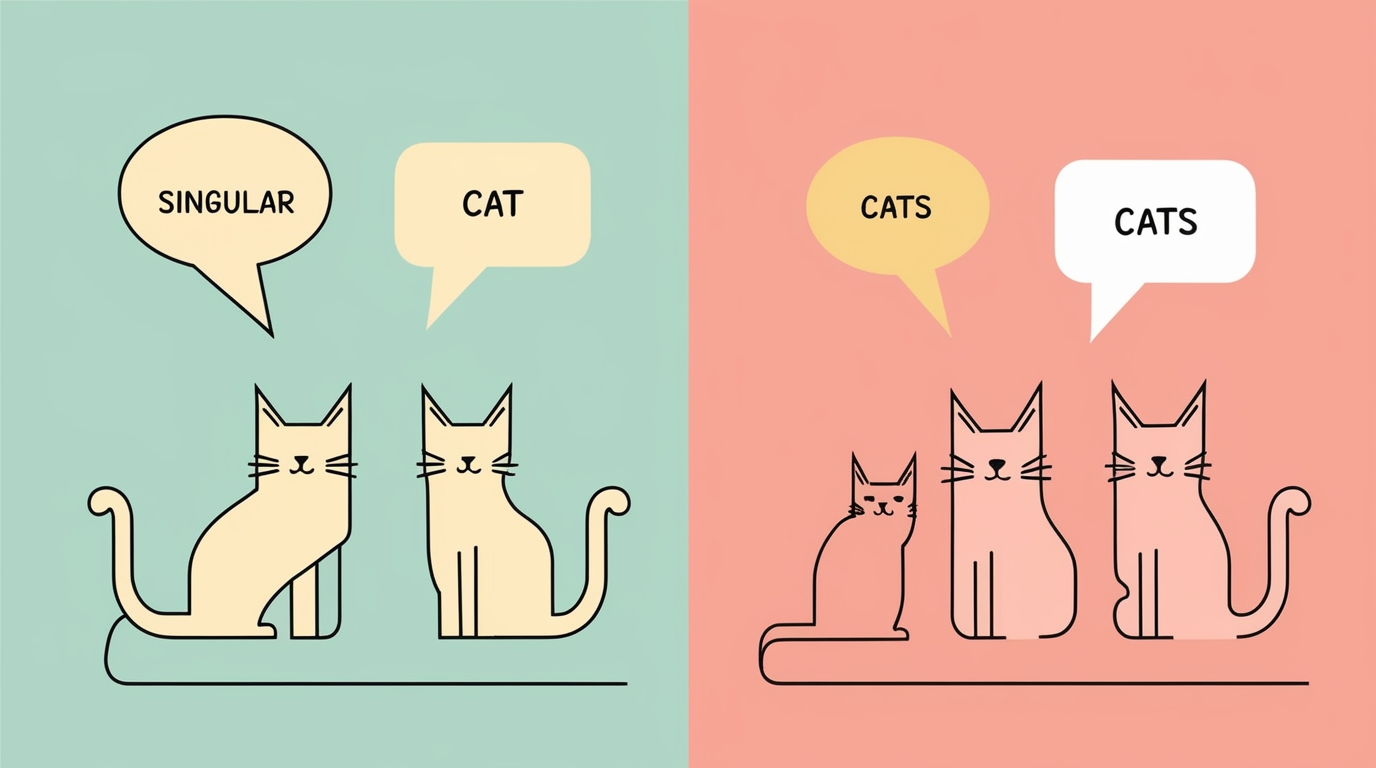
In essence, plural nouns denote multiple persons, places, things, or concepts. In English, we typically create plurals by adding an “-s” to the end of the singular form. For instance:
- Car becomes cars
- Book becomes books
- Dog becomes dogs
Like many grammar rules in English, there are exceptions and unique scenarios to consider. In the following sections, we’ll dive into various methods for forming plural nouns and highlight the essential rules to remember.
Common rules for forming plurals
1. Regular plurals: adding “-s”
As noted earlier, the majority of English nouns create their plural form by simply adding “-s” to the end. This simple rule applies to most nouns, making it easy to understand and use.
- Cat → cats
- Desk → desks
- Cup → cups
2. Plurals ending in “-es”
To form the plural of a singular noun that ends in -s, -sh, -ch, -x, or -z, simply add “-es.” This additional “-e” enhances pronunciation, making it easier to say.
- Bus → buses
- Brush → brushes
- Box → boxes
3. Nouns ending in “-y”
To form the plural of a noun that ends in “-y,” take note of the letter before the “-y.” If it’s preceded by a consonant, simply change the “-y” to “-ies.” On the other hand, if the “-y” follows a vowel, all you need to do is add “-s.”
- Baby → babies
- City → cities
- Key → keys
- Day → days
4. Nouns ending in “-f” or “-fe”
When it comes to pluralizing certain nouns that end in “-f” or “-fe,” you’ll typically transform the ending to “-ves.” However, be mindful that there are exceptions to this guideline, making it crucial to familiarize yourself with each specific case.
- Leaf → leaves
- Wife → wives
- Roof → roofs (exception)
- Chef → chefs (exception)
5. Irregular plurals
English has its fair share of irregular plurals that don’t follow the standard rules. Here are some common examples:
- Child → children
- Man → men
- Woman → women
- Tooth → teeth
- Foot → feet
- Mouse → mice
These irregular forms must be memorized, as there’s no pattern to follow.
6. Plural nouns with no change
Some nouns maintain the same spelling in both their singular and plural forms, particularly those associated with animals or specific measurements.
- Sheep → sheep
- Deer → deer
- Fish → fish (though fishes can also be used in some contexts)
- Series → series
7. Foreign plurals
Many English words borrowed from other languages keep their original plural forms, particularly those derived from Latin or Greek.
- Cactus → cacti
- Alumnus → alumni
- Phenomenon → phenomena
- Criterion → criteria
Usage rules and examples
Nouns can exist in singular or plural forms, and this distinction plays a crucial role in sentence construction. Grasping the rules of noun-verb agreement and the proper use of articles is vital for crafting accurate sentences in English. Let’s explore the key differences between singular and plural nouns.
1. Noun-verb agreement
- Singular subject noun + singular verb: My name is Joanna.
- Plural subject noun + plural verb: We are students.
2. Article usage with nouns
- Singular article + noun: My tutor is great.
- Plural (or no) article + nouns: Russell is a teacher.
Example sentences
- Singular noun: This is a nice dress.
- Plural noun: I have three sisters.
Notice how singular nouns often have an article (like “a” or “an”) before them, while plural nouns typically do not.
Common mistakes with plural nouns
Mastering the rules is just the first step; effectively applying them is where the challenge lies. Let’s explore some typical mistakes learners encounter with plural nouns and discover how to steer clear of them.
1. Adding “-s” to irregular plurals
One common error is mistakenly adding “-s” to irregular plurals. For example, you might see “childs” used instead of the correct “children,” or “mouses” instead of “mice.” It’s important to remember that irregular plurals don’t adhere to typical rules, so the best approach is to memorize them for accurate usage.
2. Confusing singular and plural forms
Words like “sheep” and “fish” can be perplexing for learners because their singular and plural forms are identical. To clarify whether these nouns refer to one or multiple entities, it’s crucial to pay attention to the surrounding context.
3. Misusing apostrophes
Apostrophes are frequently misused when forming plurals, particularly with nouns that end in vowels. For instance, many people write “apple’s” instead of the correct form “apples.” Remember, apostrophes indicate possession, not plurality!
4. Overgeneralizing rules
The “-es” ending is appropriate for nouns such as “brushes” and “boxes,” but it can lead to confusion with words like “buses,” where some learners incorrectly write “bus’s.” To avoid mistakes, always double-check your spelling for accuracy.
5. Incorrect article usage
Many learners mistakenly place an article before plural nouns when it’s unnecessary. For instance, they might say, “I have a sisters” instead of the correct form, “I have sisters.” Avoiding this common error can enhance clarity in communication.
How to master plural nouns
Mastering plural nouns takes practice, but with the right strategies, you can improve quickly. Here are some tips:
- Utilize flashcards: Design flashcards for irregular and foreign plurals to enhance memory retention. Incorporate images for a more engaging learning experience.
- Practice with real-life examples: Form sentences using singular and plural nouns to understand pluralization in context.
- **Practice Writing Exercises:** Create short paragraphs or stories incorporating diverse plural nouns to enhance your writing skills. Regular practice boosts your confidence and proficiency.
- Collaborate with a Tutor: Enhance your learning with personalized one-on-one tutoring. A tutor creates a tailored progress plan and identifies mistakes, accelerating your advancement.
To wrap up
Grasping the concept of English plural nouns is crucial for effective communication. Although the rules may initially appear challenging, regular practice and careful attention will help you master them. Embrace mistakes as valuable learning opportunities; with time and effort, you’ll see significant improvement.
To elevate your English learning journey, think about enrolling in one-on-one classes. A dedicated tutor can provide personalized support, helping you master plural nouns and navigate other tricky elements of English grammar with ease and confidence.
Unlock the secrets of English grammar by exploring our article on proper nouns! At LingualNeeds, we believe that mastering a language is a shared adventure. Join us, and let’s make strides in your learning journey together!
Frequently Asked Questions
What are plural nouns?
Plural nouns denote multiple persons, places, things, or concepts, typically formed by adding an ‘-s’ to the singular form.
How do you form plurals for nouns ending in ‘-y’?
If the ‘-y’ is preceded by a consonant, change the ‘-y’ to ‘-ies’; if it’s preceded by a vowel, simply add ‘-s’.
What are some examples of irregular plurals?
Common irregular plurals include child (children), man (men), woman (women), tooth (teeth), and foot (feet).
What mistakes should learners avoid when using plural nouns?
Learners should avoid adding ‘-s’ to irregular plurals, confusing singular and plural forms, misusing apostrophes, overgeneralizing rules, and incorrect article usage.
What strategies can help master plural nouns?
Utilizing flashcards, practicing with real-life examples, writing exercises, and collaborating with a tutor are effective strategies.